Understanding shooting sports and improving your training
A Guide to Shooting: Technique, Training, Knowledge and Glossary
This page serves as the main gateway to our shooting sport guides. Here you will find articles on 300m shooting, breathing, mental preparation, weapon knowledge, national exercises and technical terms. The aim is not to cram in as much theory as possible, but to make the process at the shooting range easier to understand and more consistent.
- Basics for beginners and experienced shooters
- Practical articles on technique, breathing and focus
- Glossary of Swiss shooting sports terminology
- Useful guidance for training, target practice and field shooting
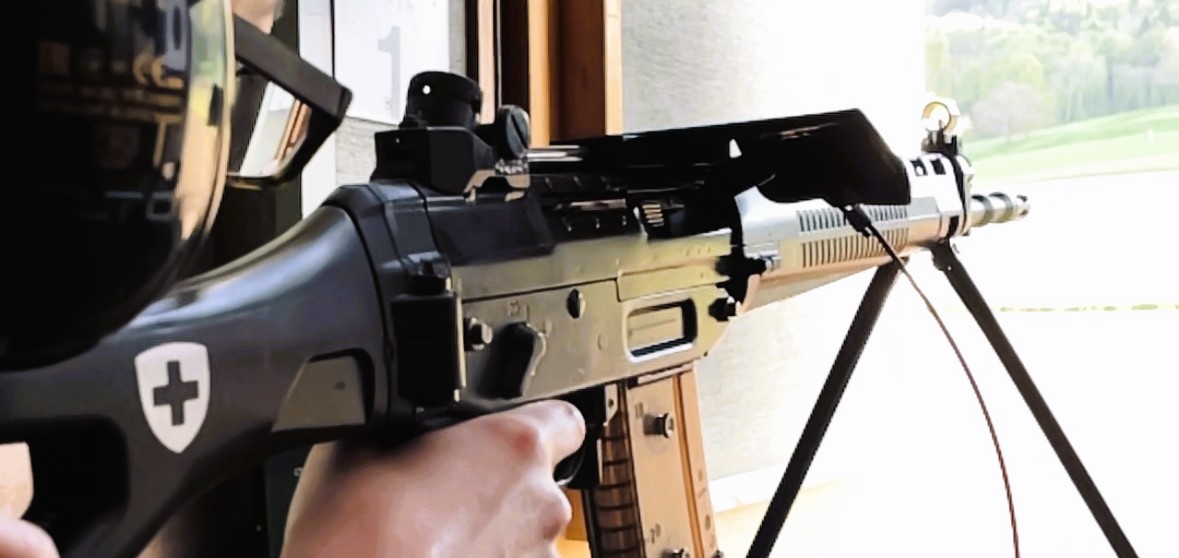
Learning to shoot: first understand the process
Many shooting errors do not arise because someone is fundamentally a poor shot, but because their technique is not consistent enough. Sometimes they take too long to aim, sometimes they pull the trigger too early, sometimes their shoulder position is different, and sometimes their breathing is uneven. At close range, this is sometimes less noticeable. At 300 metres, it becomes obvious.
A good marksman therefore does not rely on chance, but follows a clear procedure: take up position, calm your breathing, check your aim, pull the trigger smoothly, follow through, and only then assess the result. This page will guide you to the relevant articles and explain what you should focus on during training.
All the essential shooting guides at a glance
The following articles form the core of our shooting sports guide. They cover the most important topics for Swiss shooters: technical basics, breathing, mental strength, knowledge of firearms and terminology.
Better shooting at 300 metres
An overview of technique, equipment, breathing, shooting position, mental strength and stability in the Swiss 300m shooting event.
Open the guideBreathing during 300m shooting
Practical guidance on how breathing rhythm, exhalation and a natural resting point can help stabilise your shot.
Read about breathing techniquesMental training for shooters
A practical article on focus, nerves, visualisation, self-talk and pre-shot routines.
Read about mental trainingUnderstanding the Stgw 90 / SIG 550
Basic information on the construction, operation, handling and maintenance of the Stgw 90. Essential for safety and consistent training.
View weapon detailsGlossary of Swiss Shooting Sports
Technical terms from A to Z: weapons, components, ammunition, equipment, shooting procedures, competition, safety and club jargon.
Open glossaryBonds and field shooting
Information on compulsory shooting and field shooting: procedure, participation, dates, requirements and preparation.
View national exercisesHow to get the most out of the guides
An article is only useful if it leads to a specific exercise. Don’t just read the theory; instead, set yourself a clear goal for your next training session. Good shooters train simply, consistently and in a way that can be repeated.
-
Select a topic For example, focus on just your breathing, just your follow-through, or just your lying position. Making several changes at once makes it difficult to assess your progress.
-
Decide what you’re going to look out for before you start shooting Don’t wait until you’ve missed to start thinking about it. The focus of the training session is set before the series begins.
-
Give an honest review of the series Don’t just ask, „How many points?“ Ask also, „Was the process clean and repeatable?“
-
One correction per round Small, precise adjustments are more effective than frantically fiddling with your aim, grip and breathing all at once.
The main areas of focus in training
If you want to improve your shooting, you should build up the basics in a logical order. Technique is important, but it only works if your body, perception and mind are all working together.
Get into a stable position before taking aim
A stable stance is essential. If the rifle does not point naturally at the target, the body compensates by tensing up. This usually results in an unstable sight picture and unexplained misfires.
Calm prevails before the shot
Breathing calmly reduces tension and improves your aim. The key is not to hold your breath for as long as possible, but to take a natural, brief pause.
Don’t press it; pull the trigger smoothly
Many misses are not due to the sight picture, but to the trigger pull. The finger moves straight back, in a controlled manner and without jerking.
It’s not over until it’s over
Follow-through means keeping your aim and posture steady immediately after firing. This helps you spot mistakes and prevents you from lowering your weapon too soon.
New: Swiss Shooting Glossary
In shooting sports, many terms are used that are not immediately clear to new shooters: trigger, shooting stance, rear sight, front sight, GP11, GP90, ring, rangefinder, shot pattern, zero point, follow-through or firearms licence. This glossary explains these terms clearly and in the Swiss context.
This isn’t just helpful for beginners. Even experienced shooters benefit when terms are clearly explained. Anyone who understands the language of shooting will grasp instructions, rules and training advice more quickly.
Understanding compulsory shooting and field shooting
In Switzerland, national military exercises hold a special place. Compulsory shooting and field shooting are not merely dates in the calendar. They combine safe weapon handling, club activities, tradition and athletic focus.
Compulsory shooting
Information on the procedure, minimum requirements, dates, what to bring and how to prepare for the compulsory national exercise.
Read bond informationFederal field shooting
An overview of participation, the programme, awards, preparation and the significance of Switzerland’s largest mass-participation shooting event.
Watch the field shootingA simple training plan for better groupings
Improved shooting skills do not come about through random bursts of practice. Effective training has a clear focus, is carried out with precision and involves honest self-assessment. Even a modest score can be valuable if it helps to clarify the process.
Check the weapon, equipment and training objective. One focus area is sufficient.
Follow the procedure: stance, breathing, aiming, trigger pull, follow-through.
Compare the results and the process. It’s not just about the scores.
- In the case of outliers: First check the mechanism; do not turn the sight immediately.
- If you feel restless: Control your breathing and posture.
- In the event of a tie: Watch the stock, grip and trigger.
- When under pressure: Get back to your usual routine; don’t shoot any faster.
The best way to learn to shoot is with feedback
The articles and glossary will help you understand. At the shooting range, observation by experienced shooters is also key. An experienced eye can often tell straight away whether a mistake stems from your stance, your breathing, your grip or your trigger control.
Anyone who trains regularly, asks questions and builds up their techniques properly will not only become a more accurate shooter, but will also feel more composed and confident when handling a firearm.
 Deutsch
  Français
  Italiano
  English (UK)