Mental training in shooting
Mental strength in shooting: targeted training in breathing, focus and relaxation
Accurate shooting isn’t just about technique. Under pressure, it’s often the ability to regulate your own state that makes the difference: breathing calmly, focusing clearly, pulling the trigger cleanly, and, after a mistake, getting back into your routine.
What mental strength really means in shooting sports
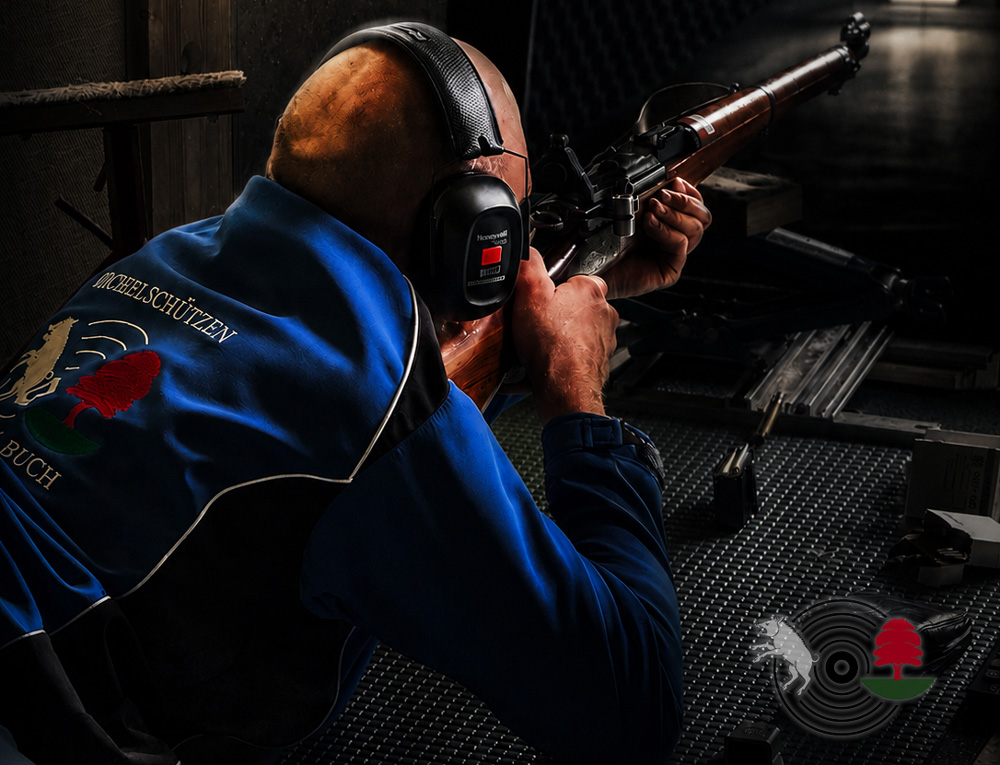
Mental strength is often misunderstood. It is not about suppressing nervousness or pretending that pressure doesn’t matter. That doesn’t work in practice. In shooting sports, mental strength means, above all: being aware of your own inner state, regulating it, and maintaining a smooth routine despite tension.
In terms of sports psychology, it is about Self-regulation. Thoughts, emotions, breathing, muscle tension and focus all influence one another. If internal arousal becomes too high, breathing becomes shallower, the mental image becomes more unsettled and the trigger pull less controlled.
A certain amount of nervousness is normal and can even be helpful. Nervousness shows that the moment is important. It only becomes a problem when it disrupts the process. That is why breathing techniques, visualisation, self-talk and a consistent shooting routine should not be left until the end of training, but incorporated right into the middle of it.
The key point: focus on the process rather than the result
Many shooters lose their composure not because of a lack of technique, but because of negative thoughts. Typical thoughts include: „I have to get this shot right now“, „I messed up the last one“ or „I mustn’t let it slip now“. These thoughts focus attention on the result, mistakes or fear.
However, precision does not come from the pressure to perform. It comes from controllable steps in the process: stance, breathing, aiming, trigger pull and follow-through. It is precisely these points that must be the focus before the shot is fired.
- Before the shot: Prepare the procedure.
- During the shot: don’t overthink it.
- After the shot: evaluate briefly and objectively.
Here’s a simple rule: once you’ve set your aim, stop analysing. Then it’s simply a matter of carrying it out. The evaluation comes afterwards.
Breath control: the quickest link between body and mind
Breathing is one of the most important relaxation techniques in shooting sports. Under pressure, it often becomes shallow, rapid and irregular. This increases muscle tension. It is precisely this that undermines the conditions needed for a steady aim and a clean trigger pull.
Calm, controlled breathing helps to lower your arousal level and refocus your attention on the next task. The key point is this: breathing techniques are not just a last-minute trick for competition day. They must be practised in training so that you can draw on them when under pressure.
A practical breathing exercise before taking a shot
-
Breathe in slowly Don’t hunch your shoulders. Keep your breathing deep and steady.
-
Breathe out slowly As you breathe out, consciously release the tension from your shoulders, hands and jaw.
-
Be aware of your breathing Take advantage of the brief natural pause after exhaling, without holding your breath too tightly.
-
Pull the trigger cleanly or set it down If the target image and the trigger do not match, the shot is aborted. This is a safety measure, not a mistake.
Taking too long to aim is one of the most common mistakes. If the shot isn’t fired cleanly and on time, your breathing becomes more laboured, your muscles tense up and your judgement is impaired. In such moments, it’s better to reset and start again.
Visualisation: Mentally preparing for the shot
Visualisation means mentally running through the desired sequence of actions as clearly as possible. The key is not just to visualise the goal. The goal is the result. What you practise is the path to it.
Effective visualisation involves a mental image of the target, body awareness, breathing, trigger control and follow-through. The more specific this mental image is, the easier it will be to recall the sequence later during training or competition.
Short visualisation session
-
Find some peace and quiet Take two or three deep breaths.
-
Work out the sequence in your mind Explain the stance, aiming position, sight picture and trigger pull step by step.
-
Build in difficulties Noise, waiting time, nervousness, or mentally replaying a bad shot.
-
Practise resetting Practise internally how to stay calm and get back into your own routine.
Visualising difficult situations is particularly valuable. Those who only practise perfect scenarios in their minds are less well prepared for disruptions. Those who, on the other hand, also mentally run through scenarios involving pressure, mistakes and distractions, develop greater confidence in their ability to act.
Self-talk: What we say to ourselves influences our performance
In shooting sports, you’re constantly talking to yourself. After a bad shot, thoughts like: „That shouldn’t happen“ or „Now my run’s over“ quickly spring to mind. Phrases like these increase tension and distract you from the next shot.
Short, action-oriented and positively worded key phrases are more helpful. They do not describe what should be avoided, but rather what specifically needs to be done.
| Unfavourable | Better | Why |
|---|---|---|
| „Not forgiven.“ | „Move out cleanly.“ | The focus is on the desired action. |
| „Don’t make a mistake now.“ | „Take it slowly.“ | The process becomes more important than the fear of making a mistake. |
| „The last one was rubbish.“ | „Next step.“ | His mind returns to the present. |
| „I have to score.“ | „Stance, breathing, trigger.“ | Controllable process points replace the need to print results. |
A good focus word is short, familiar and practical. It should be practised during training. By the time the competition comes around, it must already be second nature.
Pre-shot routine: The mental framework for every shot
A pre-shot routine is a set sequence of thoughts and actions immediately before taking a shot. It helps maintain concentration and reduces random fluctuations. The clearer the routine, the less room there is for unnecessary thoughts.
A good routine isn’t complicated. It needs to be repeatable, short and tailored to your needs. The key is to stick to it consistently during training.
Check the body
Quickly check your posture, balance, shoulders, hands and jaw.
Regulate your breathing
Take a calm breath, exhale slowly, release the tension.
Set the focus
Use a short focus word such as „calm“, „clean“ or „pull“.
Get ready to shoot
Aim at the target, pull the trigger, follow through, and only then assess the result.
Dealing with mistakes: It’s not the mistake itself that’s the problem, but how you react to it
Every shooter makes mistakes. What matters is how you react afterwards. If you get annoyed, start second-guessing yourself or frantically try to correct the mistake, you’ll carry that mistake over into your next shot. It makes more sense to do a quick reset.
-
Accept The shot has been taken. Anger won’t change that.
-
Exhale Taking a deep, calm breath helps to reduce tension and slow down.
-
Take your eyes off Briefly exit the review.
-
To spot a point Breathing, trigger control, posture or timing. Don’t try to correct everything at once.
-
Start afresh Focus on the target and set up the next shot properly again.
Analysis is useful; brooding is not. Analysis leads to concrete action. Brooding only increases the tension.
Mental training in everyday life and at the shooting range
Mental strength is not built through a one-off burst of motivation, but through repeated practice. Short sessions are sufficient, provided they are done regularly.
| Date | Exercise | Objective |
|---|---|---|
| 2–3 times a week | 2 to 5 minutes of calm breathing exercises | Control your activation and reduce muscle tension |
| Before training | Visualising shooting technique | A clear mental start |
| During training | Use your pre-shot routine before every shot | Improving consistency and focus |
| After training | Jot down a brief mental assessment | Learning rather than just comparing results |
| Before competitions | Combining breathing, visualisation and the process objective | Start more calmly and steadily |
A simple series of five shots is particularly effective: the same routine is performed before each shot. If the aim or breathing is off, the shooter stops. After the series, the first step is to check whether the routine was followed. Only then is the shot pattern assessed.
Common mistakes in mental training
- Starting too late: Using mental techniques only on the day of the competition is not very effective.
- Taking too long to aim: If the shot isn't coming out right, it's better to stop and start again.
- Just keep an eye on the points: Points are the result. It is the process that needs practising.
- Negative self-talk: Phrases such as „not forgiven“ often paint exactly the wrong picture.
- Too many corrections: When under pressure, you should always focus on just one clear priority.
More practical knowledge for better shooting
In the Tips and Tricks category you’ll find further practical guidance for your training: from breathing techniques and concentration to target setting and advanced shooting techniques. However, much progress is made directly at the shooting range. Talk to experienced shooters, observe proper techniques, ask questions and keep up with your training.
What matters is not a single perfect shot, but the ability to repeat good techniques time and time again. That is precisely where consistent and accurate shooting begins.
More practical knowledge for better shooting
In the Tips and Tricks category you’ll find further practical guides for your training: from breathing techniques and concentration to target setting and advanced shooting techniques. However, much progress is made directly at the shooting range. Talk to experienced shooters, observe proper techniques, ask questions and keep up with your training regularly.
What matters is not a single perfect shot, but the ability to repeat good techniques time and time again. That is precisely where consistent and accurate shooting begins.
See more tips and tricks Deutsch
  Français
  Italiano
  English (UK)